DODIIS 2026
iCYLON is bringing a rapidly evolving ecosystem of connected data, operational awareness, Collaborative Agentic AI, and mission orchestration to DoDIIS Worldwide 2026.
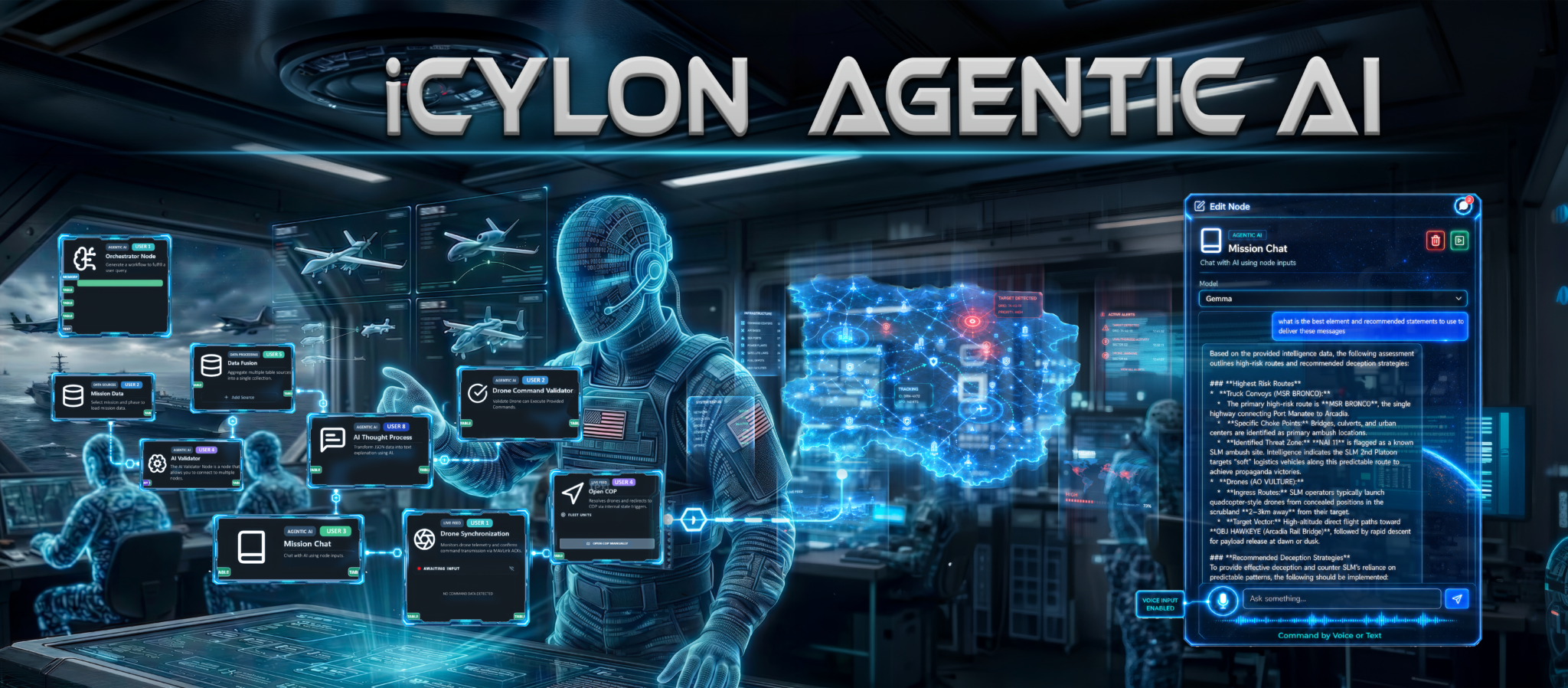
At iCYLON, we believe the future of battlespace intelligence is not another isolated dashboard, database, or AI chatbot. It is a connected mission environment where data, people, analytical tools, AI models, software, sensors, and operational systems work together.
That is what we are bringing to DoDIIS Worldwide 2026.
Our team has been building and improving the platform every day in preparation for the event. Attendees will see new datasets, expanded COP/CIP layers, richer graph relationships, AI-generated workflows, stronger collaboration controls, human-verification capabilities, and new ways to move from an emerging signal to coordinated mission action.
From Massive Data to Mission-Relevant Intelligence
Defense and intelligence organizations do not lack information. The challenge is finding what matters, connecting it to the broader environment, and acting before the opportunity passes.
The iCYLON ecosystem begins with our Exquisite Graph, which currently supports more than 21 billion graph nodes and 28 billion relationships. It can fuse structured and unstructured information, regional and global datasets, live feeds, and authorized customer sources into one connected intelligence model.
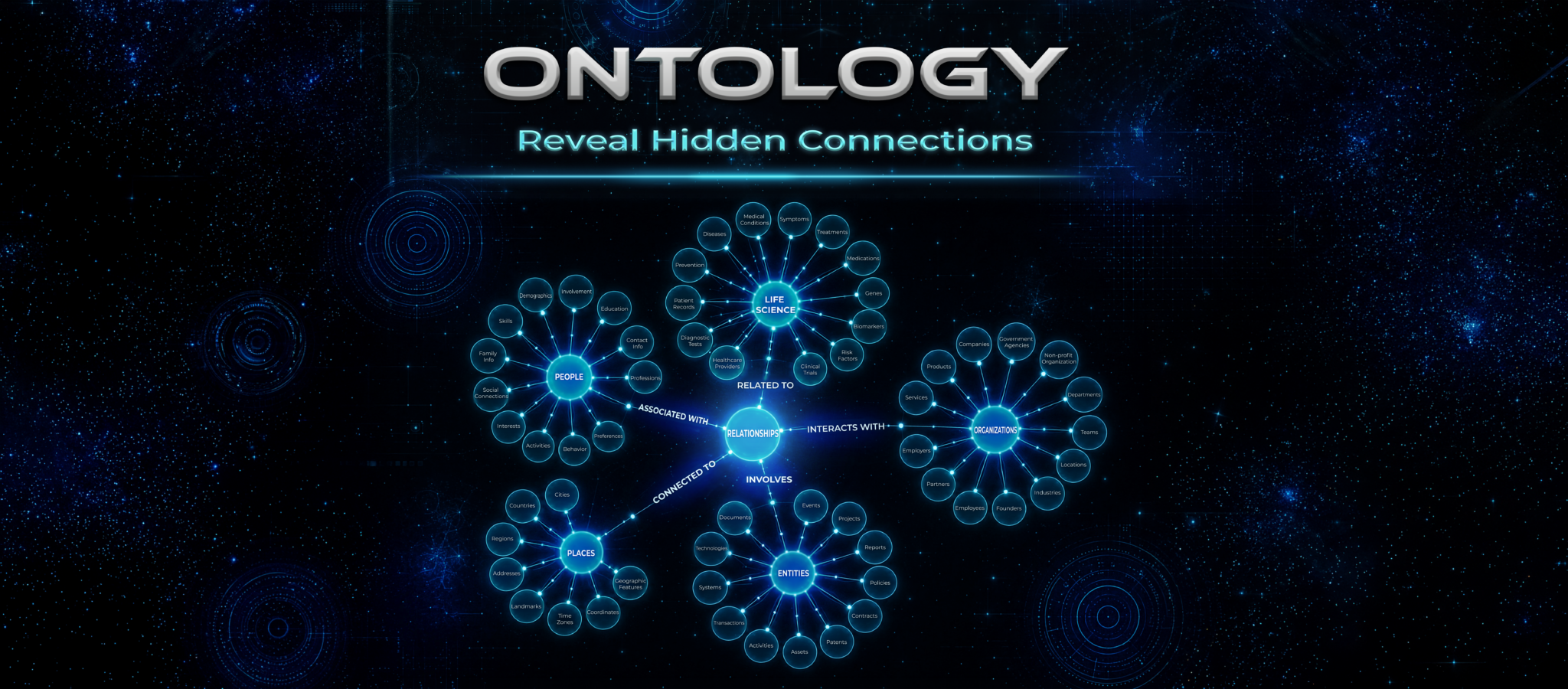
Our Data Orchestrator ingests, normalizes, enriches, quality-checks, and synchronizes that information. Ontology then grounds people, organizations, locations, events, selectors, behaviors, and relationships in an explicit graph structure.
Instead of returning another disconnected list of records, the platform helps analysts discover networks, intermediaries, priority entities, critical paths, behavioral changes, and relationships that may otherwise remain hidden.
The result is not simply more data. It is data prepared for investigation, visualization, collaboration, AI-assisted analysis, and mission use.
A Living Operational Picture
Connected intelligence becomes more powerful when users can immediately understand where activity is happening and how it relates to the surrounding environment.
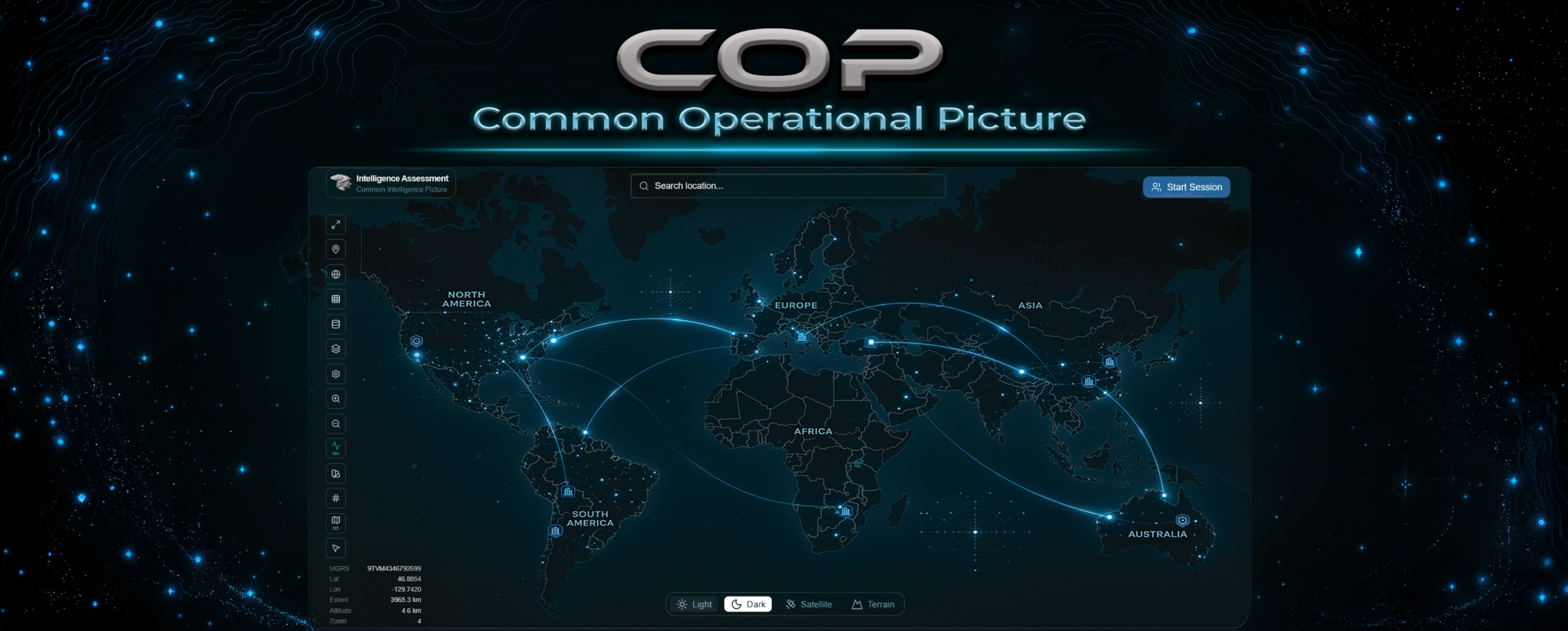
Our Common Operational Picture and Common Intelligence Picture—COP/CIP—bring graph intelligence, infrastructure, entities, events, routes, facilities, vessels, live feeds, and other mission-relevant information into interactive 2D and 3D geospatial views.
Recent updates include new and improved data layers, clearer entity and location information, richer pop-up windows, regional intelligence views, and expanded collaboration features. We have also continued developing AI-assisted COP controls that allow users to describe what they want to see, activate relevant layers, move to an area of interest, or begin an investigation through natural-language instructions.
A user can select a person, organization, location, facility, route, vessel, or event directly in COP/CIP and launch a graph lookup, AI-assisted question, report, or complete workflow. The results can then return to the operational picture with their geographic, temporal, and mission context preserved.
That means analysts can move from seeing activity to understanding its connections without rebuilding the investigation in another system.
Collaborative Agentic AI—With the User Still in Control
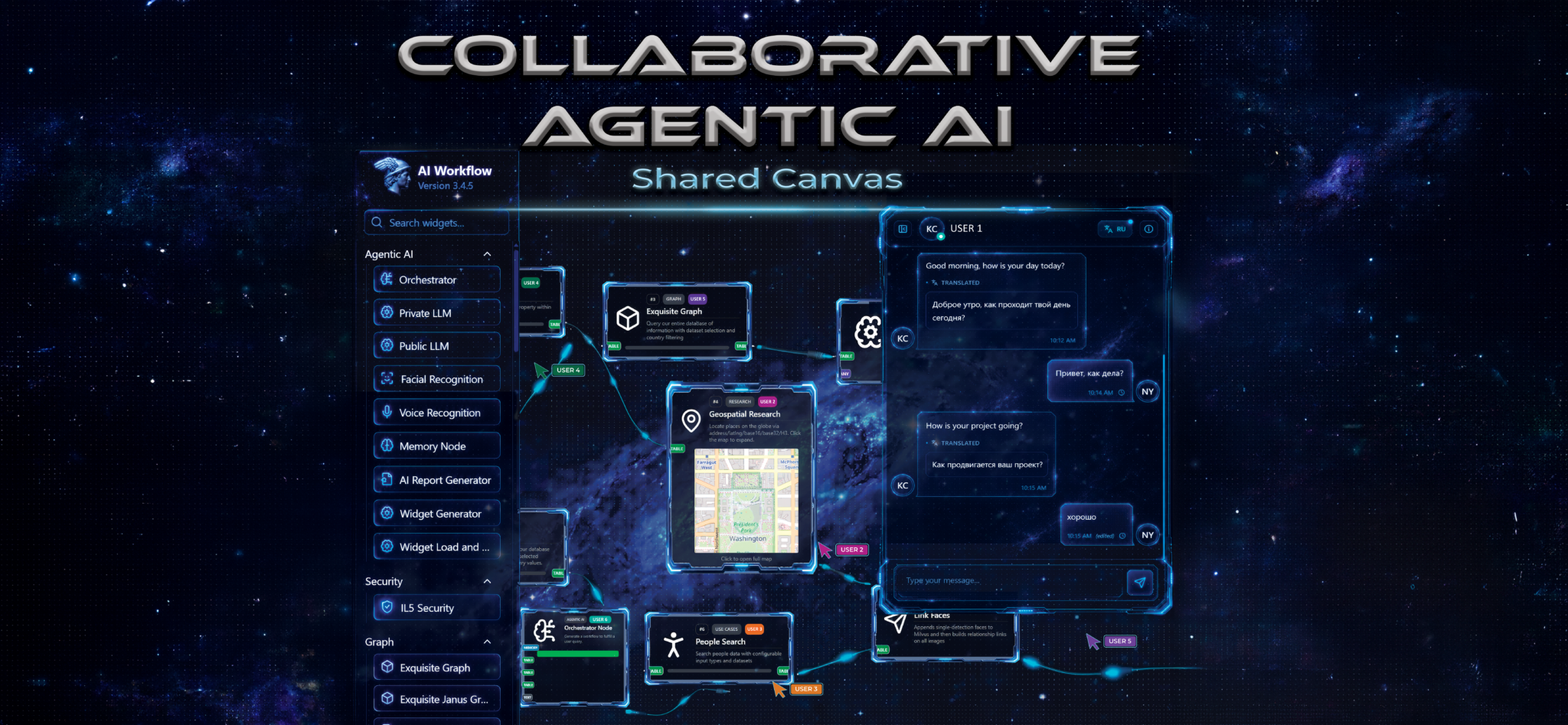
Our Collaborative Agentic AI Platform transforms mission objectives into visible, adjustable workflows.
A user can describe an objective in plain language, and the platform can select and connect the appropriate graph queries, datasets, models, analytical tools, COP/CIP functions, gateways, agents, and workflow components.
The workflow is not hidden behind a black-box response. Teams can view it on a shared canvas, refine its logic, branch the analysis, replace a tool or model, change a threshold, or manually control any step.
Multiple authorized users can collaborate inside the same environment using live shared sessions, presentation modes, multilingual communication, and role-based permissions. Access can be controlled at the workflow, widget, agent, dataset, graph-node, and output levels.
New AI Validator and Human Verification widgets can also pause high-impact actions before execution. This creates a practical balance between machine speed and human judgment: automate what can be accelerated while keeping people in control of what must be verified.
From Intelligence Workflow to Mission Orchestration
The same platform that connects information can also help coordinate action.
Our Mission Orchestrator is not limited to drones. It can connect people, teams, software, sensors, vehicles, robots, infrastructure systems, analytical tools, data pipelines, IoT devices, UAS/UAV platforms, and other authorized mission assets through secure gateways.
A workflow could detect a change in a live feed, compare it with historical patterns, search the Exquisite Graph for related entities, generate an MDpedia report, display the activity in COP/CIP, request human verification, notify the appropriate users, and route the result into a follow-on mission process.
MDpedia accelerates the research stage by combining AI-generated summaries with source documents, associated people and organizations, evidence attachments, graph relationships, references, confidence, and rationale.
The Common Data Fabric supports the governance behind those actions. It controls who may share information, what may be shared, with whom, and under which agreement. Blockchain-supported chain of custody can preserve creation, modification, verification, transfer, acceptance, version history, and accountability.
This allows intelligence to move faster without losing its source, context, or audit history.
Proven, Not Promised
The capabilities iCYLON is bringing to DoDIIS already exist today.
Our current ecosystem integrates collection, ETL, ontology, Exquisite Graph, GraphRAG, Common Data Fabric, COP/CIP, MDpedia, Collaborative Agentic AI, and mission orchestration in one extensible environment.
New data sources, mission regions, models, indicators, thresholds, workflows, roles, and reporting views can be added without rebuilding the core platform. Shared sessions and reusable outputs help teams reduce duplicate work, conserve AI and third-party resources, and route intelligence directly into additional workflows.
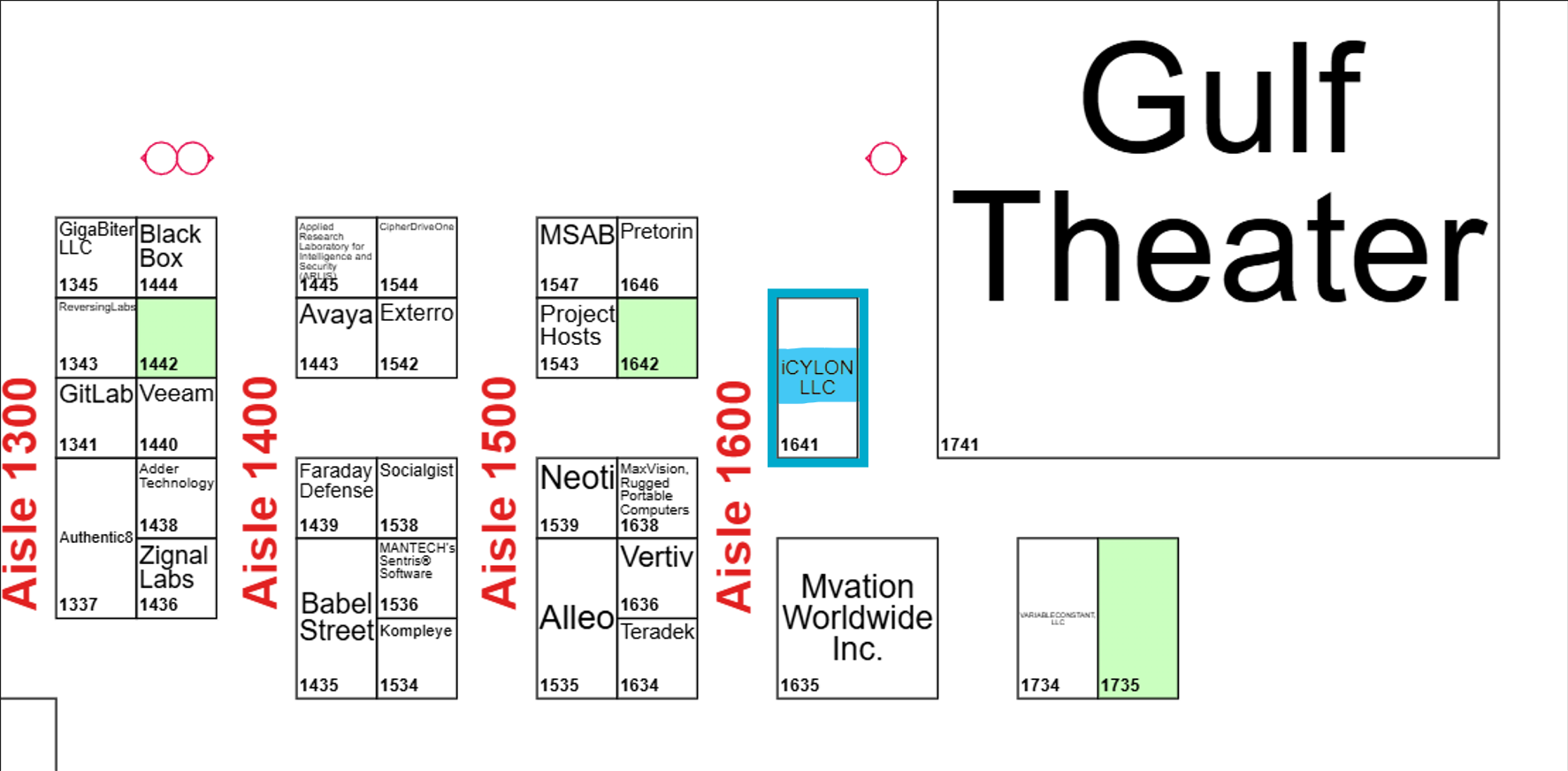
Visit iCYLON at Booth 1641 to meet our team and explore our newest updates!